Best Smart Lights of 2026: Bulbs, Strips, and Spotlights Worth Buying
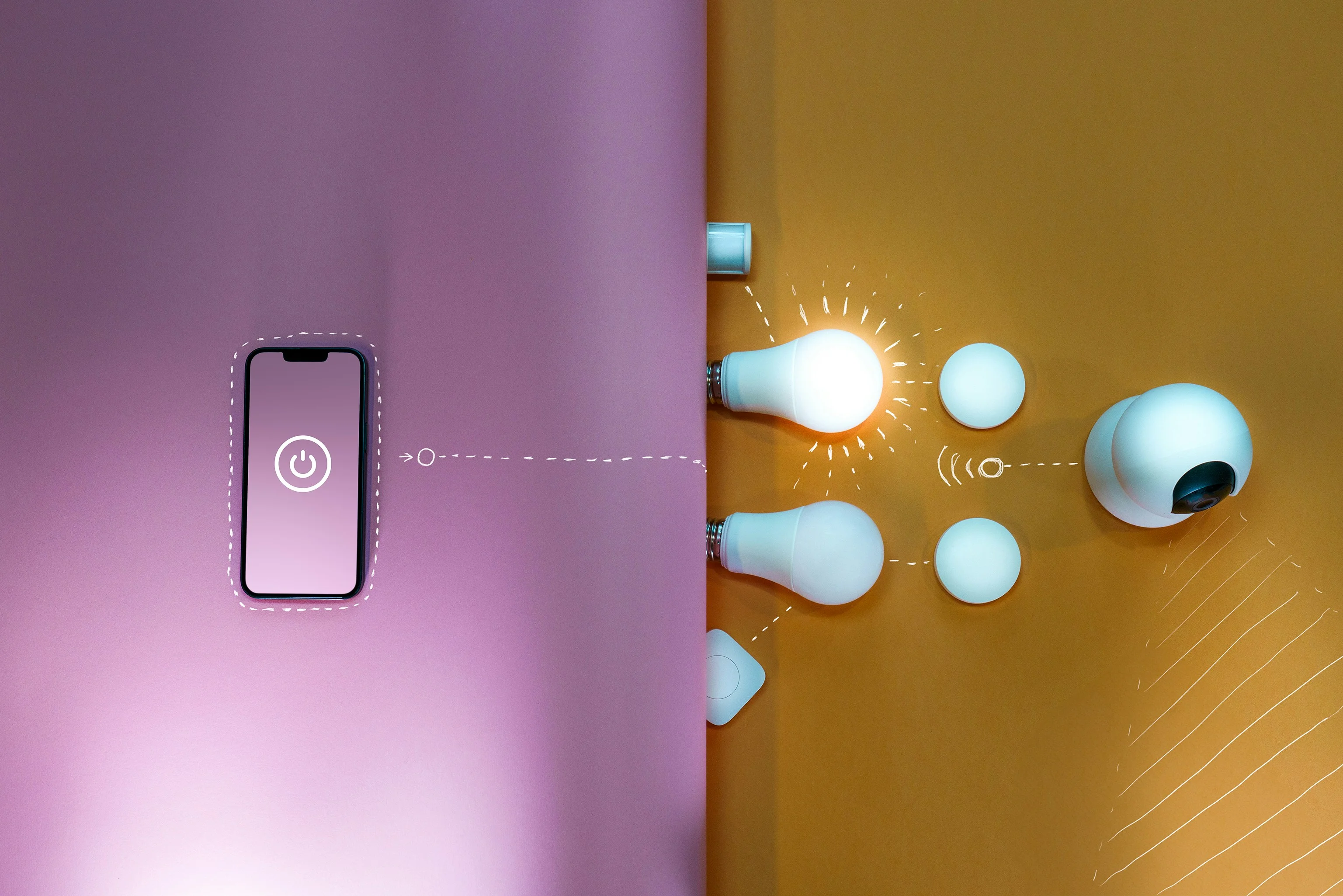
Smart lighting is the most common entry point into a smart home and the most common source of early regret. Cheap bulbs have dim white channels, adhesive that fails in six months, and apps tied to cloud accounts that disappear. The decision that prevents all of this isn’t which brand to buy — it’s which of three questions actually applies to you.
Question 1: How long do you plan to keep this setup?
If the answer is “just trying it out” or “one lamp in a rental,” the Govee Smart Bulbs at $19.99 for a 4-pack are the right starting point. Solid app control, Alexa and Google Home compatibility, and color accuracy that’s acceptable for ambient use. The app is responsive and voice commands work reliably.
Budget bulbs often don’t publish their CRI rating — Govee is no exception. CRI measures how accurately colors appear under the light; standard is 80+, good is 90+. For ambient color and mood lighting, this matters less. For a workspace or reading area where accurate color rendering matters, it starts to show.

If you’re setting up a full room or want hardware that works long-term without ecosystem risk, Matter support changes the calculus. WiZ A19 Smart Bulbs (3-pack, $27.72) are the mid-range pick that gets this right: 800 lumens, tunable white from 2700K to 6500K, CRI 80+, and Matter compatibility means they’ll work with whatever voice assistant or hub you end up on — no ecosystem lock-in. Connect directly over Wi-Fi, no hub needed, clean app.
For a full-house setup where you want everything integrated and working reliably for years, Philips Hue Warm White at $42.49 is still the benchmark. The Zigbee mesh is the most stable connectivity option in smart lighting, and the ecosystem has deeper automation support than any competitor — Alexa, Google, HomeKit, and Matter all work natively. The Hue Bridge costs $60 on top of the bulbs. That’s the real tradeoff. Once it’s set up, nothing else in this category comes close on reliability.

Question 2: Are you doing ambient decoration or actual illumination?
For a TV backlight, cabinet accent, or entertainment setup where the goal is visual atmosphere rather than functional light, the answer is Govee RGBIC strips. At 16.4ft for $14.99, they deliver individual LED segment control — different colors simultaneously across the strip — with app control and Alexa integration that works reliably.
Minimum specs that actually matter for strips:
- 60 LEDs per meter minimum (below this density, individual dots become visible)
- 12W per meter or higher for real brightness
- IP65 rating if near moisture (bathroom mirror, kitchen backsplash)
- RGBW, not just RGB — the white channel is what gives you usable white light for actual illumination, not just color effects
Anything priced under $10 for 16ft is almost universally underpowered, uses adhesive that fails in months, and ships with an app tied to a cloud account that may not exist in two years.

Question 3: Are you replacing bulbs or recessed cans?
If your home has recessed can lights, smart recessed retrofits are the most seamless upgrade available — no electrician, no new hardware, just a retrofit that installs in minutes. Brands like Sengled and Govee make Zigbee and Wi-Fi smart retrofits for BR30-size cans (standard 6-inch, most common).
What to look for: BR30 size, dimmable (confirm compatibility with any existing dimmer switch before ordering), and a color temperature range of at least 2700K–5000K.
Quick comparison table
| Category | Pick | Hub required |
|---|---|---|
| Budget bulb | Govee A19 RGBWW (2 Pack) | No |
| Mid-range | WiZ A19 (3 Pack) | No |
| Premium | Philips Hue Warm White | Yes ($60 - $99) |
| LED strip | Govee RGBIC 16.4ft | No |
The setup mistake most people make
Buying different brands for different rooms. Your lights end up in three separate apps with no way to automate them together. Pick one brand for each zone and commit — even if it costs slightly more upfront.
More Articles
Ring Peephole Cam 2K: What to Know Before You Pre-Order
Ring's newest peephole camera brings 2K resolution and renter-friendly installation to apartments and condos. Here's what changes, what stays the same, and what to check before your door qualifies.
July 22, 2026Best Anker Back to School Tech for Students and Teachers in 2026
Three Anker picks that solve the real problems of campus and classroom life — dead phones between classes, single-port laptops, and never enough outlets.
July 20, 2026Anker Student Discount: How to Save 15% on Charging Gear with Student Beans
Anker offers a verified 15% student discount through Student Beans — here's exactly how to claim it in under two minutes on the US Anker website.
July 20, 2026